
Blindside Waterproofing: How It Protects Foundations
Waterproofing should never be considered an afterthought in the construction process, and for many builds, blindside waterproofing is one of the most important strategies for protecting below-grade structures from water intrusion.
What Is Blindside Waterproofing?
Whenever the exterior side of a building’s foundation wall will not be accessible after construction is complete, blindside waterproofing should be incorporated during the early stages to ensure the structure is properly protected from moisture intrusion.
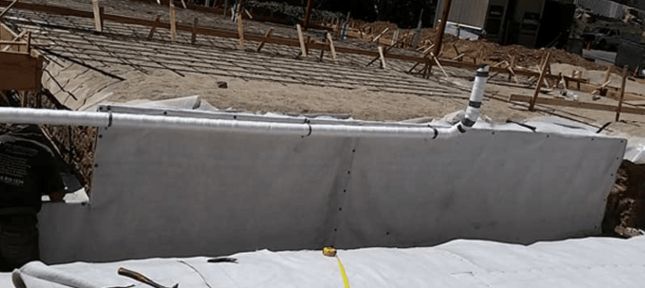
This type of waterproofing is not applied to the actual foundation, and instead rests directly against soil, retention walls, or shoring systems, such as lagging and soldier piles. Once the concrete foundation is poured, it will bond to this waterproofing system, creating a strong barrier that prevents water from entering the structure.
Commercial Blindside Waterproofing
This type of below grade waterproofing is commonly seen in many commercial buildings, especially in crowded urban areas with tight property lines, in high-rise buildings, multi-family housing, or any building that features subterranean parking structures.
Residential Blindside Waterproofing
While most homes in Southern California don’t feature a basement, many homes are built into hillsides. Whenever you have foundation walls poured directly against soil retention systems, blindside waterproofing is essential.
Waterproofing Materials
Blindside waterproofing relies on specialized materials designed to be installed before concrete placement and to perform without future access. A blindside waterproofing specialist has several different options available, each designed to address specific site conditions and ensure a continuous, reliable barrier against hydrostatic pressure and water damage. For example:
Sheet Membrane Systems
These are pre-manufactured waterproofing sheets that are installed against the soil retention system before the concrete is poured. They create a consistent, factory-controlled thickness and often bond directly to the concrete, preventing water migration. Some common types include:
- HDPE (high-density polyethylene) membranes
- Composite membranes with adhesive layers
- Fully bonded sheet systems
Bentonite Clay Systems
These systems use sodium bentonite, a natural clay that expands when it comes into contact with water. These are installed as panels, sheets, or geotextile composites, and when exposed to moisture, the clay swells and seals gaps.
Fluid-Applied Waterproofing Membranes
These are liquid coatings that are sprayed or rolled onto a prepared surface and cure to form a seamless waterproof barrier. These create a seamless layer with no joints, which reduces potential leak points. Common materials include:
- Polyurethane
- Rubberized asphalt
- Polymer-modified coatings
Composite Systems
Many blindside applications use multi-layer systems that combine different materials for improved durability and performance under hydrostatic pressure. Some examples include:
- Sheet waterproofing membrane + bentonite layer
- Membrane + drainage board
- Protective layers integrated with waterproofing
Beyond Blindside Waterproofing
While this type of waterproofing is essential when foundations rest against soil or shoring, it is not the only type of waterproofing that should be applied during the construction of a home or commercial property.
Positive-side foundation waterproofing should be applied to any accessible exterior foundation walls. These often are tied into blindside systems at transition points to ensure a tight, waterproof seal. Waterproofing should be applied beneath foundation slabs, and integrated with blindside systems at wall/slab connections.
For homes built on a crawlspace foundation, professional crawlspace waterproofing should be an essential step during the construction process. Typically, complete encapsulation is the best option, and this is the process of sealing the crawlspace with a durable vapor barrier and controlling moisture to prevent humidity, mold growth, and structural damage.
Additionally, adequate drainage systems must be put in place around the perimeter of a structure. A combination of quality waterproofing systems and drainage systems is the best defense against water intrusion, and, unfortunately, these often are overlooked during construction, particularly with residential properties.
Is Waterproofing Required?
In some cases, typically with commercial structures, local or state building codes require the installation of high-quality waterproofing systems. However, for single-family residential properties, the codes often only require what is known as damp-proofing.
Damp-proofing is common in homes across Southern California and involves applying a basic waterproof coating to exterior foundation walls. While this may be the only level of water protection required by law, it is by no means adequate.
Basic damp-proofing does not protect against hydrostatic pressure; this is pressure that builds up as water soaks into soil and pushes against the foundation of a structure. This pressure will force water into tiny cracks or gaps in your concrete foundation. Keep in mind, concrete itself is porous, and water can seep into concrete if it is not waterproofed properly.
Additionally, the simple coatings used for damp-proofing break down quickly, so the moisture resistance may only last for a few years. Add in some ground movement, which can crack concrete foundations, a few years of seasonal rain, and the end result is a poorly waterproofed structure that likely will need expensive repairs at some point.
Thome Waterproofing: Blindside & Below-Grade Waterproofing Services
Blindside waterproofing is a specialized service that requires specific materials, expertise, and coordination with other trades, so it’s crucial to choose a waterproofing contractor with direct experience in these systems, and, at Thome, we have extensive experience with blindside waterproofing for both commercial and residential construction projects.
We can provide any type of below-grade and foundation waterproofing you might need, as well as comprehensive deck waterproofing and balcony waterproofing. Whether you need blindside waterproofing or another of our services, Thome is one of the top waterproofing companies in Los Angeles, and we serve the entire Southern California region. Contact us at any time to discuss your waterproofing needs.
Comments are closed.