
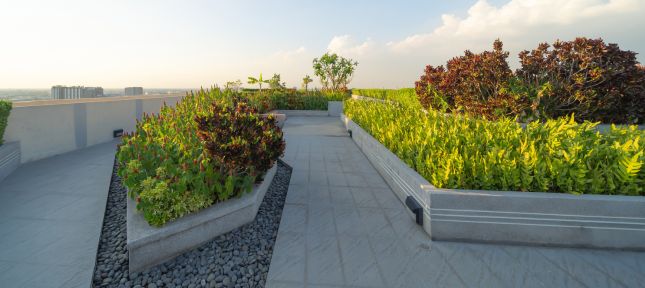
Planter Waterproofing: Protect Your Property & Plants
Decorative planters can add warmth, color, and visual interest to any residential or commercial property. However, without proper planter waterproofing and drainage, plants may struggle to thrive, while moisture can damage the planter itself and surrounding structures.
Why Planter Waterproofing Is Necessary
Built-in concrete, masonry, and rooftop planters are repeatedly exposed to irrigation water, wet soil, fertilizers, and expanding roots. Without an effective waterproofing system, moisture may eventually penetrate small cracks or porous materials.
This can contribute to:
- Water stains and discoloration
- Efflorescence on concrete or masonry
- Peeling paint and damaged finishes
- Mold or mildew growth in nearby areas
- Corrosion of embedded metal components
- Cracked or deteriorating concrete
- Leaks into balconies, rooms, garages, or other spaces below
- Costly structural repairs
Of course, ensuring adequate drainage is just as important. Drainage directs excess water out of the planter, while waterproofing prevents the remaining moisture from penetrating the planter walls and surrounding structure.
If you notice that plants are suffering from issues such as root rot, yellowing leaves, or they seem to struggle despite adequate irrigation, this indicates that your planter is likely not draining properly. You may have issues both with waterproofing and drainage. Soil that constantly seems damp or soggy also is likely due to poor drainage.
What Does Planter Waterproofing Entail?
Many customers are surprised to find that this can be quite an extensive project. Typically, waterproofing contractors begin by removing the plants, soil, and any other materials, such as rocks, from the planter. If possible, plants and trees may be reused and replanted, depending on their general health and your inclinations.
From there, we clean and prepare the planter, making any necessary repairs. Often, when we are called in to provide this type of waterproofing service, we will need to repair cracks or deteriorated concrete or stucco.
Once repairs are made, we can work on improving the drainage system, if needed, as well as applying a compatible waterproofing membrane. We also often add a root-resistant barrier over this membrane to protect it from root growth. From there, we will test the system to ensure that it is draining properly and watertight before adding soil and plants.
Which Plants Should You Choose?
Once your planter is properly waterproofed, the real fun begins – selecting the plants. For outdoor planters in Southern California, it’s always smart to select drought-tolerant plants that can handle our abundant sunshine. While this won’t eliminate the need for irrigation, it can reduce your water needs significantly.
If you plan to replant small trees in the planter, we may recommend certain species, as some trees have vigorous or invasive root systems and may not be suitable for your planter space. Of course, it’s also important to select plants that have similar soil, sunlight, and watering needs. Here are some options for various conditions.
Plants for Full Sun with Fast-Draining Soil
The following plants typically prefer a gritty, sharp-draining mix formulated for succulents and plants suited to a Mediterranean climate.
- Aloe – This lovely plant has very low water requirements and requires little pruning, although we do recommend selecting an appropriate size for your planter.
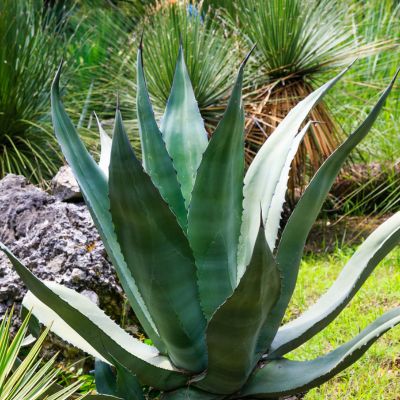 Agave – This also has very low water needs and is extremely easy to care for, although sharp varieties should be kept well away from walkways as they can pose a hazard.
- Sedum – Also known as stonecrop, this is a flowering succulent that looks beautiful along the edges of planters, and it is an easy-care plant with very low water requirements.
- Echeveria – This succulent is available in a wide range of colors, and it is well suited in shallow planters. It also has very low water requirements and requires little maintenance.
- Aeonium – If you want a succulent that will add some dramatic height to a planter, this can be a great option. Its water requirements are low, as well.
- Red Yucca – This can be a great option in hotter areas of Southern California, as this plant is quite heat-tolerant and features gorgeous red flowers.
 Lavender – Lavender is a beautiful plant, and bees love it! It does need good air circulation and occasional pruning, but it can be a dramatic addition to your planter.
- Rosemary – This is available in upright and trailing forms, and not only is it edible, but it also repels many garden pests and attracts bees and other pollinators. It also has high drought tolerance and needs very little maintenance.
- Compact Sage or Salvia – These produce seasonal flowers and attract pollinators, yet also have low water needs.
Plants For Full Sun & Well-Drained Loamy Soil
These plants are best suited for loamy soil with more organic matter than succulents, although the soil should be well-drained and not continually wet. While these plants all have low water needs, they are not quite as drought-tolerant as succulents.
 Dwarf Bottlebrush – Because these are colorful and evergreen, they are a pleasing addition to your planter year-round. We recommend selecting a compact version of this, as it will be easier to maintain and best for planters that have a limited soil volume.
- Bush Monkey Flower – This colorful California native requires relatively little water once established and produces bright flowers that enliven sunny planters.
- Germander – With its compact growth, evergreen foliage, and low water needs, germander works well as a border plant or small, neatly trimmed hedge.
- Lantana – Heat-tolerant lantana produces abundant clusters of colorful flowers, although occasional trimming may be needed to keep it from overwhelming the planter.
- Dwarf Olive – A compact, nonfruiting dwarf olive provides attractive silvery-green foliage without the size, fruit, and maintenance demands of a full-sized olive tree.
- Westringia – Sometimes called coast rosemary, westringia is an evergreen, drought-tolerant shrub that handles pruning and coastal conditions particularly well.
- Lomandra – This durable, grasslike plant adds texture and movement to a planter while requiring relatively little water or ongoing maintenance.
- Blue Fescue – Blue fescue forms compact mounds of blue-gray foliage, making it an attractive, low-maintenance choice for planter borders and smaller spaces.
- California Fuchsia – This heat-tolerant California native produces vivid tubular flowers that add seasonal color and attract hummingbirds.
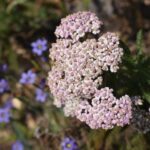 Yarrow – With its feathery foliage and clusters of colorful flowers, yarrow adds softness to sunny planters while requiring little water once established.
Plants for Partial Sun & Well-Drained Soil
In general, these are low-maintenance plants that can receive morning sun and afternoon shade. Partial sun means that the plants will receive four to six hours of direct sunlight per day. However, keep in mind that if your plant is against a south or west-facing wall, these hours of sunlight might be hotter, as the afternoon is warmer and the sun can be more intense.
- Clivia – This low-to-moderate-water evergreen produces striking orange flowers and performs best when protected from intense afternoon sun.
- Coral Bells – Known for their colorful foliage, coral bells prefer partial shade and protection from the hottest afternoon sunlight.
- Dwarf Flax Lily – This low-water, grasslike plant adds texture to a planter, with variegated varieties providing additional color and visual interest.
- Lilyturf – Requiring low to moderate amounts of water, lilyturf works well as an attractive border or as a massed planting in larger planters.
- Sweet Bay – This aromatic evergreen can be maintained as a compact shrub with regular pruning and generally performs well in partial sun.
- Compact Salvia – Available in numerous colorful varieties, compact salvia requires relatively little water and can tolerate some afternoon shade.
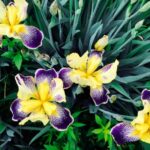 Iris Varieties – Irises provide upright, sword-shaped foliage and seasonal flowers while requiring low to moderate amounts of water.
- Trailing Rosemary – This low-water herb can spill attractively over a planter’s edge, provided it receives enough sunlight.
What About Roof Decks?
If you are adding plants to a rooftop deck, you likely will want to take special care when selecting plants. Roof decks create special challenges because these plants may face intense sun, reflected heat, and strong winds. Low-growing and compact plants often are preferable because they are less likely to be damaged by wind.
Our Waterproofing Services
We can provide planter waterproofing for homeowners as well as commercial properties, including apartment communities, business parks, educational facilities, hospitals, and more.
In addition, we also provide a myriad of additional services, including retaining wall waterproofing, deck waterproofing, and balcony waterproofing. We also offer concrete waterproofing services, including concrete pool deck coating and coatings for walkways and concrete patios.
The team at our waterproofing company can also provide any type of foundation waterproofing you might need, from crawlspace waterproofing to blindside waterproofing.
Whether you need planter waterproofing or something else, we serve residential and commercial clients throughout the Los Angeles metro area, including Ventura County. Contact us at any time for a free cost estimate for our services.
Comments are closed.